


Food Processor vs. Blender: What's the Difference?
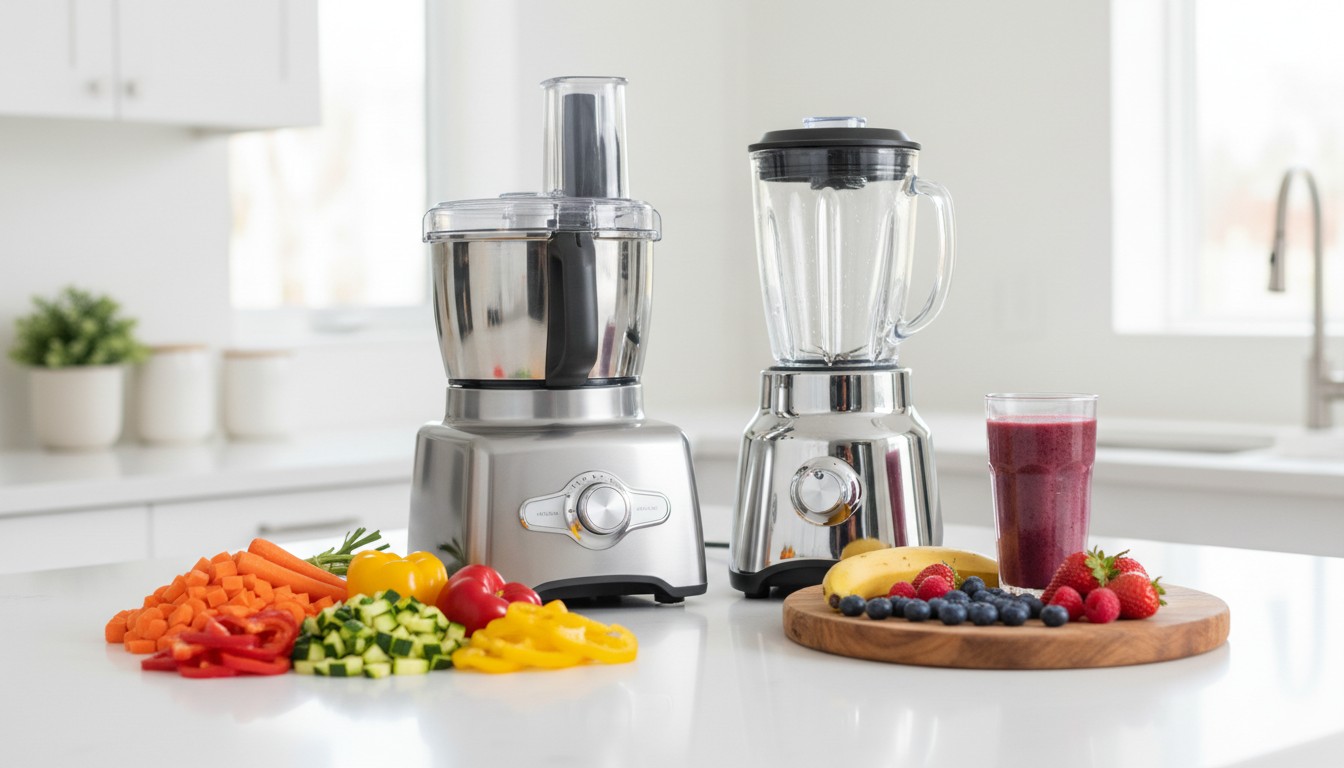
If you're stuck trying to figure out whether you need a food processor or a blender, you're not alone. Both of these handy kitchen appliances are incredibly useful, but they serve very different purposes, and choosing the right one can make a big impact on how you prep meals at home.
When picking, the decision comes down to the types of meals you cook and what kind of prep you're looking to do. Food processors are great for chopping, slicing, shredding, and even kneading dough, making them perfect for in-depth meal prep or batch cooking. Blenders, on the other hand, are ideal for creating liquid-based dishes like smoothies, soups, and sauces, offering pourable results with minimal effort.
Whether you're prepping veggies for a soup, whipping up a quick breakfast smoothie, or experimenting with baking, knowing the difference makes your cooking faster, easier, and more enjoyable. In this blog, we'll break down the key differences between food processors and blenders, explore what each appliance is best at, and help you figure out which one (or both) is the right fit for your New Zealand home.
By the end, you'll know exactly which kitchen companion deserves a spot on your bench and how to get the most out of it. In this article, we'll cover these topics:
- A quick guide to food processors vs. blenders
- What is a food processor?
- What is a blender?
- The key differences between food processors and blenders
- Should you choose a food processor or a blender?
- Frequently asked questions (FAQs)
A quick guide to food processors vs. blenders
Food processors and blenders serve different purposes in the kitchen. A food processor is best for chopping, slicing, shredding, kneading, and handling chunky or tough ingredients, making it ideal for meal prep and batch cooking. A blender, with its high-speed motor and narrow jug, excels at creating smooth liquids like smoothies, soups, sauces, and frozen drinks.
Choosing between the two depends on the dishes you are looking to prepare. Check out the table below for a quick guide to the key differences, or keep reading for more details.
| Feature | Food Processor | Blender |
|---|---|---|
| Primary functions | Chopping, slicing, shredding, kneading, mixing | Blending, pureeing, crushing ice |
| Typical tasks | Chopping vegetables, shredding cheese, kneading dough, mixing dips and sauces | Blending smoothies or protein shakes, pureeing soups or sauces, mixing frozen drinks |
| Blade types | Interchangeable discs and blades for slicing, shredding, chopping, kneading | Fixed high-speed blades, sometimes removable for personal blenders |
| Shape | Wide, cylindrical bowl with feed chute for larger ingredients | Tall, narrow jug designed for vortex blending |
| Motor power | High-torque motor for solid or tough ingredients | High-speed motor for smooth liquid blends |
| Best for | Versatile prep, handling chunky or tough ingredients, batch cooking | Smooth liquids, purees, drinks, soups, and dressings |
What is a food processor?
A food processor is a powerful kitchen appliance that is designed to cut down on prep time by simplifying hands-on tasks like chopping, slicing, shredding, pureeing, mixing, and just about anything else that involves turning whole ingredients into something ready to cook.
Most food processors feature a sturdy motor base, a sealable bowl to keep things tidy, a wide feed chute for adding ingredients, and a set of interchangeable blades that create different textures depending on what you're making.
For many Kiwis, the appeal is simple: you can enjoy cooking without having to do all the fiddly work. Whether you're prepping veggies for a weeknight dinner or tackling a more involved recipe, a food processor steps in to handle the heavy lifting.
How a food processor works
A food processor uses a high-torque motor and a range of blade attachments to break down whatever ingredients you feed into it. Once everything is assembled, you simply drop your ingredients through the feed chute, switch it on, and let the blades do the rest.
The wide, cylindrical bowl helps the food circulate as it spins, ensuring it's chopped, sliced, or pureed evenly until it reaches the texture you want. When you're happy with the result, the bowl lifts off easily so you can transfer everything straight into your pot, pan, or mixing bowl for the next step.
Best uses for a food processor
Across Kiwi kitchens, food processors get used for all sorts of everyday jobs: chopping or slicing veggies, shredding cheese, or pureeing ingredients into a smooth soup, sauce, or dip. But it's the versatility of this appliance that makes it such a solid investment.
With the right attachments, food processors can be used to knead dough, grind nuts for baking, mix fillings, or even handle bulk meal prep without breaking a sweat. They're especially handy when you need to process large quantities at once or tackle tougher mixing tasks that a blender just isn't built for.
If saving time and simplifying your cooking routine sounds appealing, check out the full range of food processors available at Noel Leeming and find the right fit for your kitchen.
What is a blender?
A blender is a versatile and useful kitchen appliance designed to help blend ingredients together to create a smooth, uniform mix, perfect for everything from morning smoothies to hot soups.
Most blenders feature a compact motor base, a set of sharp blades, and a tall, narrow jug that sits securely over the blades to keep everything contained while it blends.
Blenders are perfect for dealing with liquid-based mixtures like smoothies, soups, and dressing, but tend not to fare well with tougher tasks. Similar to food processors, blenders often come with multiple removable blade attachments for handling different tasks as well as a removable jug that doubles as a cup for busy Kiwis on-the-go.
How a blender works
Blender jugs are designed to sit upside down so ingredients are pulled down toward the set of fixed blades at the base. As the high-speed motor kicks in, the contents spin into a vortex, constantly circulating to create a smooth, even texture.
There are a variety of blenders available, from standard models that are great for your everyday use to high-performance options that add extra power for tougher ingredients. Personal blenders sit at the compact end of the scale, perfect for Kiwis who like to whip up a single-serve smoothie and head out the door.
Best uses for a blender
Most people reach for a blender when they want liquids blended properly. Smoothies are the obvious go-to, but blenders are just as useful for hot soups, fresh dressings, pancake batters, and crushing ice for summer drinks. The results tend to be smoother than what you'd get from a food processor, and the smaller footprint means it's easy to leave on the kitchen counter without cluttering up your space.
The trade-off for a blender vs. a food processor is versatility. A blender isn't built to chop veggies, knead dough, or mince nuts, so it's not a great choice for dry mixing or hands-on prep. But if you just want something that's smooth, pourable and ready-to-drink, browsing the blender range at Noel Leeming is a great place to start.
The key differences between food processors and blenders
When it comes to deciding between a food processor and a blender, it's important to consider how you will use each appliance differently in the kitchen. Understanding these differences can help Kiwis pick the right tool for their cooking style and the types of meals they prepare.
Design
Food processors typically feature a wide, cylindrical bowl with a feed chute, making it easy to drop in larger vegetables or fruits without pre-cutting. Blenders, on the other hand, have a tall, narrow jug that guides ingredients toward fixed blades, perfect for creating smooth, liquid-based mixes.
The shape and design of each appliance reflects its purpose: food processors excel at handling solid ingredients and tough textures, while blenders are best at dealing with liquids and creating smooth textures.
Performance
Performance comes down to torque versus speed.
Food processors rely on high-torque motors to handle tougher, chunkier ingredients, making them ideal for chopping, slicing, or shredding. Blenders focus on high-speed motors that create a vortex to pull ingredients down into the blades and mix them together, which is why they're so effective at producing a smoother consistency.
Choosing the right appliance often depends on whether you need power for prep work and tough ingredients or speed for smoother textures.
Results
The results you get from each appliance reflect their design and performance.
Food processors leave ingredients chunkier, which works perfectly for salads, dips, and baking prep. Blenders deliver a smoother, more uniform texture, making them ideal for liquids and purees.
In other words, if you want something pourable, a blender is your go-to. If you need to do some serious food prep with some texture, a food processor is better suited.
Attachments & accessories
Another difference lies in attachments. Food processors often come with multiple discs and blades for slicing, shredding, or even kneading. Their wide range of possible attachments makes them incredibly versatile at handling different kinds of ingredients and textures.
Blenders usually stick to one set of blades and a removable jug, sometimes doubling as a portable cup. This is perfect for Kiwis on the move but limits other types of food prep.
Should you choose a food processor or a blender?
Deciding between a food processor and a blender doesn't have to be tricky. It all comes down to the types of meals you cook most often and what you need to prep in the kitchen. Here's a simple guide for Kiwis weighing up their options:
Choose a food processor if…
A food processor is ideal when you need a versatile appliance for hands-on prep tasks. Opt for one if you often find yourself:
- Chopping or slicing vegetables for weeknight dinners
- Shredding cheese or grating ingredients for recipes
- Kneading dough for baking
- Making dips or sauces
- Mincing herbs or nuts
- Preparing larger batches of food for meals
Choose a blender if…
Blenders shine when you want smooth, liquid-based results quickly. They're a great choice if you regularly make:
- Breakfast smoothies or protein shakes
- Soups, sauces, and dressings
- Smooth batters for pancakes or waffles
- Frozen drinks or cocktails
- Purees for baby food or recipes requiring silky textures
Choose a food processor–blender combo if…
For Kiwis who like to cook a wide variety of dishes or prep large batches, having both appliances can be a huge help. A combo setup works best when:
- Recipes involve both chunky prep and smooth blending
- Batch prepping meals for families or gatherings
- Looking for the flexibility to tackle any task in the kitchen
No matter your style, finding the right appliance makes cooking simpler and more enjoyable. You can shop a wide range of small kitchen appliances (including food processors and blenders) online or in-store at Noel Leeming today.
Frequently asked questions (FAQs)
Here are some frequently asked questions related to food processors and blenders. Have a question that isn't on the list? Leave a comment for our team below or visit us in-store to talk to one of our kitchen appliance specialists.
Are food processors and blenders the same?
While both appliances can be used for some of the same tasks and have similar components, food processors and blenders are not the same. A food processor is designed for chopping, slicing, shredding, and kneading solid ingredients, whereas a blender is built to create smooth, liquid-based results like smoothies, soups, and sauces.
Can I use a blender instead of a food processor?
In some cases, yes, you can use a blender instead of a food processor. But while a blender is great for liquids or soft foods, it isn't ideal for tougher, solid ingredients. Tasks like shredding tough vegetables, chopping nuts, or pureeing thicker mixes are much easier with a food processor.
What does a food processor do that a blender doesn't?
A food processor can handle tasks a blender struggles with, including chopping, slicing, grating, and mincing tougher ingredients. It's also better for batch prep and handling food in larger quantities, which is something that a blender has trouble dealing with.
Which is better: a food processor or a blender?
Whether a food processor or blender is better depends on what you are using it to prepare. Choose a food processor if you want versatile prep options and need to deal with tougher textures, or a blender if you primarily make smoother, liquid-based dishes.
Can a food processor make smoothies?
While some food processors can blend soft ingredients into a smoothie, they won't achieve the silky texture you get from a high-speed blender. For everyday smoothies, a blender is usually the better choice.
Is a blender or a food processor easier to clean?
Blenders tend to be simpler to clean due to their single jug and fixed blades. Food processors have multiple attachments and bowls, which take a bit more time. In the end, it all depends on your specific model and what attachments you are using.
Is a blender or a food processor better for baby food?
Blenders are typically better for smoother baby food purees, while a food processor is useful if you want to be able to handle tougher textures as your little one grows. Some Kiwi parents keep both to cover all stages of baby feeding.
Conclusion
Choosing between a food processor and a blender really comes down to how you cook and what you make most often. Whatever your kitchen style, there's a perfect match waiting, so explore the full range of food processors, blenders, and combo models at Noel Leeming. You're sure to find one that'll make everyday cooking faster, easier, and a whole lot more enjoyable.